
Lighting is one of those traps that looks innocent until it blows up your frame time. In URP Forward, the real problem is not just that lights are expensive. The real problem is the 8 real-time lights per object limit. Hit that on a big floor, a crowded platformer, or a scene full of projectiles, and Unity starts making choices for you.
Forward+ exists for that exact moment. Instead of iterating lights one by one, it groups them into clusters so the fragment stage can scale past the classic Forward limit. That does not make it a free win. In the lesson benchmark, Forward is still cheaper at low light counts. The payoff of Forward+ is that it scales saner once your scene truly needs more overlapping lights.
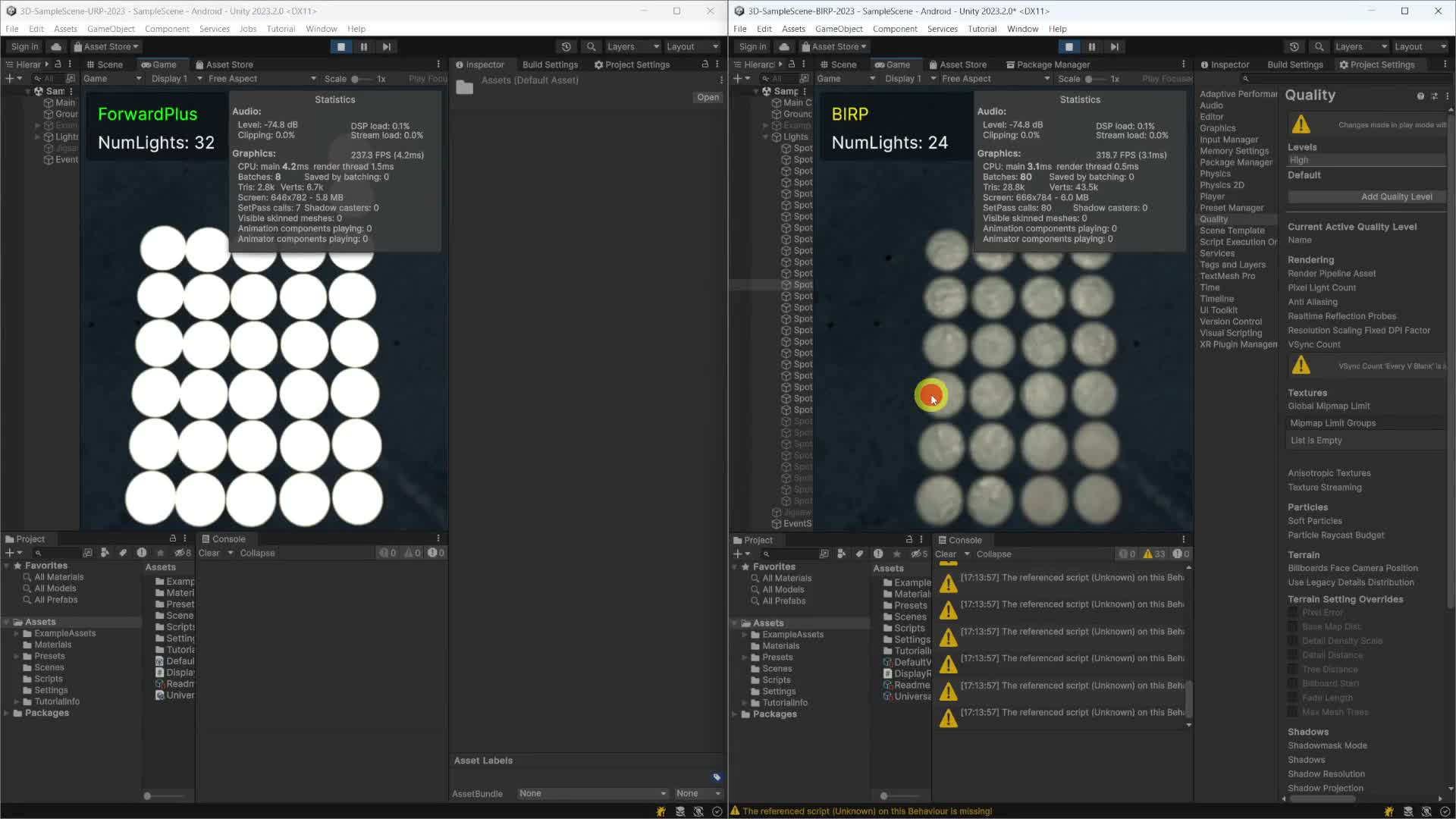
Start here: take one light-heavy scene and stop arguing from intuition. Check how many real-time lights can hit the same big mesh, then compare Forward versus Forward+ on the target device. If your scene is happy with four or five lights, plain Forward is still a very valid answer. The proof in this module is blunt: at 32 lights, URP can still sit at about 8 batches while the Built-in Render Pipeline explodes to about 104.
The first hard warning is memory bandwidth. Deferred shading removes a lot of light-count pain, but on mobile it can punish you hard through bandwidth. That is why the decision rule here is practical: if you need six or more lights and you do not depend on unsupported features like XR or an orthographic camera, compare Forward+ against Deferred. If bandwidth is tight, Forward+ is often the better trade.
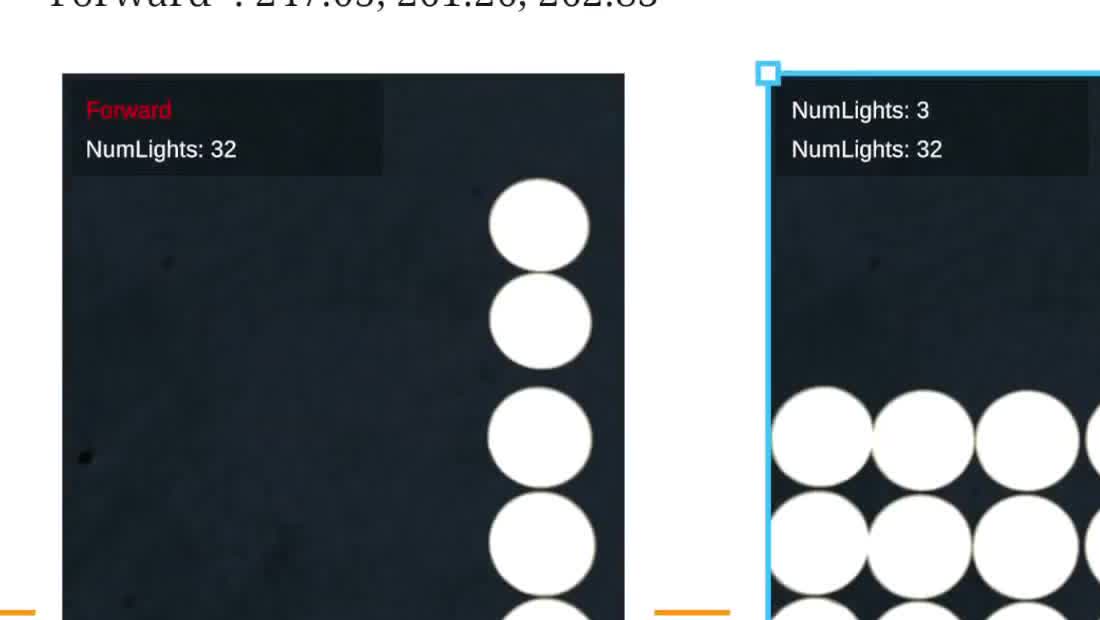
CEO/Producer translation: this is how you stop a lighting-heavy art direction from turning into a late pipeline rewrite.
This is a small preview. The members-only module is the full step-by-step playbook: the Forward and Forward+ theory, the URP shader/source-code path, the synthetic benchmark breakdown, the Built-in Render Pipeline comparison, and the Q&A that turns this into a pipeline decision instead of a guess.
In this module:
Join to unlock the full module, audio, and resources.