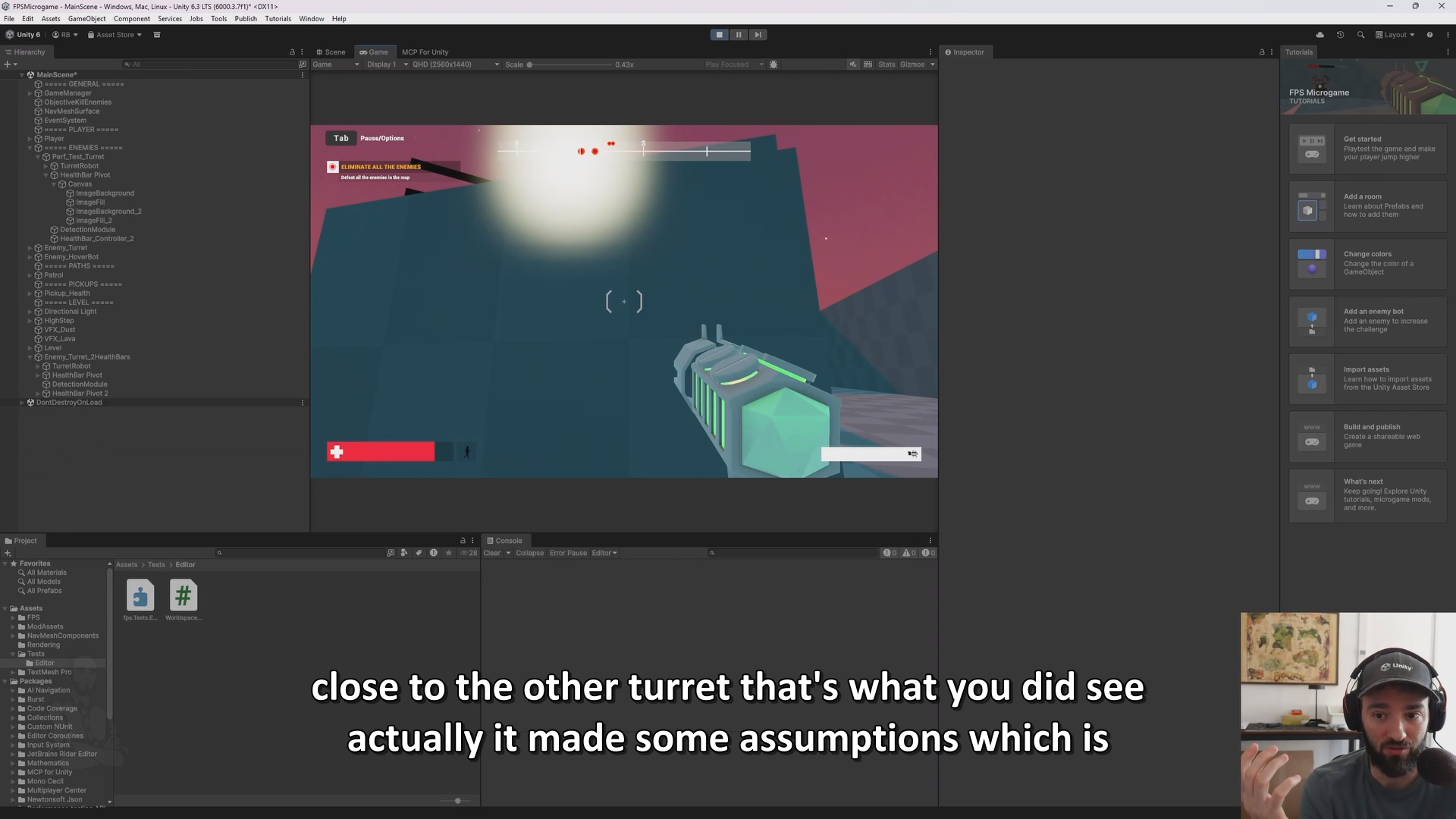
Your personal dev agent can already read code. It can profile. It can even fix things.
But if it still goes blind the moment the real answer lives inside the Unity Editor, you are still paying a manual-work tax. And yeah, that tax gets expensive fast.
This lesson closes that gap. Not with more theory. With a workflow that lets your coding model inspect live Unity state, validate its assumptions, and stop making quite so many dumb guesses.
Practical next step: the next time your AI gives you a confident answer about a scene setup, hierarchy issue, or test result, ask yourself one question first: is it reasoning from reality, or just from partial context?
CEO/Producer translation: this is how you reduce verification drag, recover engineering time, and remove a sneaky productivity leak from your Unity workflow.
Below, I’ll show you where this gets dangerously useful, where it still breaks, and how to turn it into the beginning of an autonomous dev loop instead of just another flashy AI demo.