
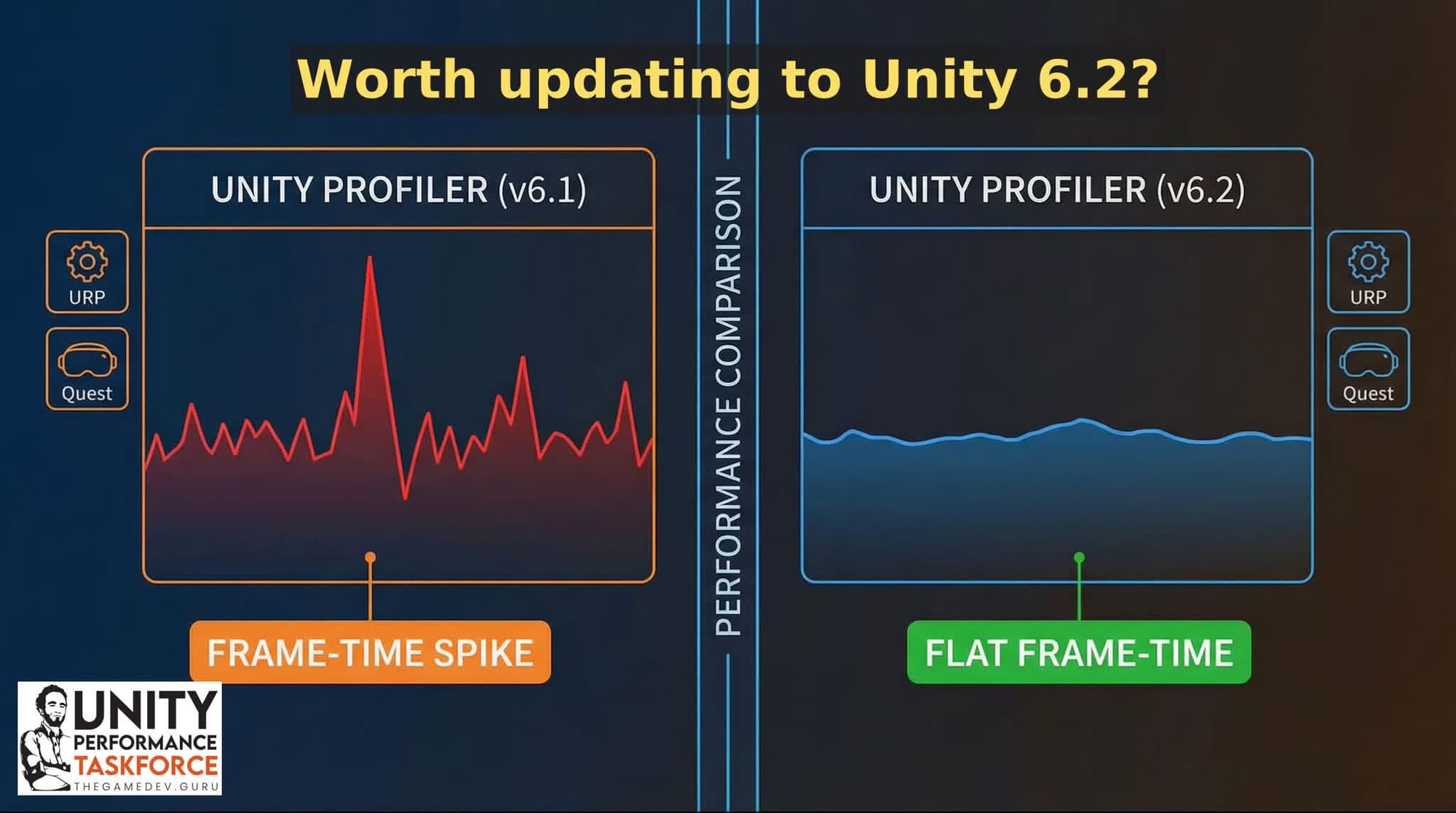
Unity 6.2 (6000.2) has a bunch of performance work that’s not just “micro-optimizations.”
The big themes:
- Fewer main-thread stalls during async loading
- Meaningful URP regression fixes on Quest for post-processing setups
- Job system/kernel scalability and Arm JobHandle.Complete() regression fixes
- Physics regression fixes for large collider counts
- Multiple memory fixes/leak plugs across rendering (DX12, Vulkan graphics jobs, shader keyword edge cases, 2D Light2D, editor IMGUI leak).
Tasty!
Quick win (2 minutes)
- If you’ve seen hitches during async asset loads: 6000.2 fixes cases where the main thread could be blocked during asynchronous loading (Editor/Player). Re-test your benchmark scene with a Development Build + Profiler capture.
- If you ship on Meta Quest with URP and Depth Copy + Uber Post: 6000.2 includes a fix for up to ~20% performance regression in specific cases;run an A/B build and verify GPU/CPU frame time.
- If your game stalls when starting audio streams on Android: 6000.2 fixes a bug where starting new audio streams could cause a main thread stall.
- If your physics-heavy scene got worse over time: 6000.2 includes fixes for performance regressions in OnTriggerStay dispatch and IgnoreCollisions() at scale
- Plus improved Physics.TransformSync in deeply nested collider hierarchies. This one is solid. Many of my consulting clients suffer from this in their games.
Ready? Let's go.
Upgrading Unity isn’t free. Even when the changelog says “fixed regression,” you still pay the tax: merge time, package compatibility, QA cycles, and the risk of trading one bottleneck for another.
So the only rational question is: does 6.2 fix your kind of pain?
- Stalls during async loading
- Quest URP regressions
- Arm job system weirdness
- Collider-heavy physics scenes
- Memory pressure that turns into spikes later in a session.
This breakdown groups the 6.2 performance changes into “player-visible wins,” “regression fixes,” and “pipeline/editor sanity,” then gives you a concrete validation plan so you can prove (or reject) the upgrade with data.
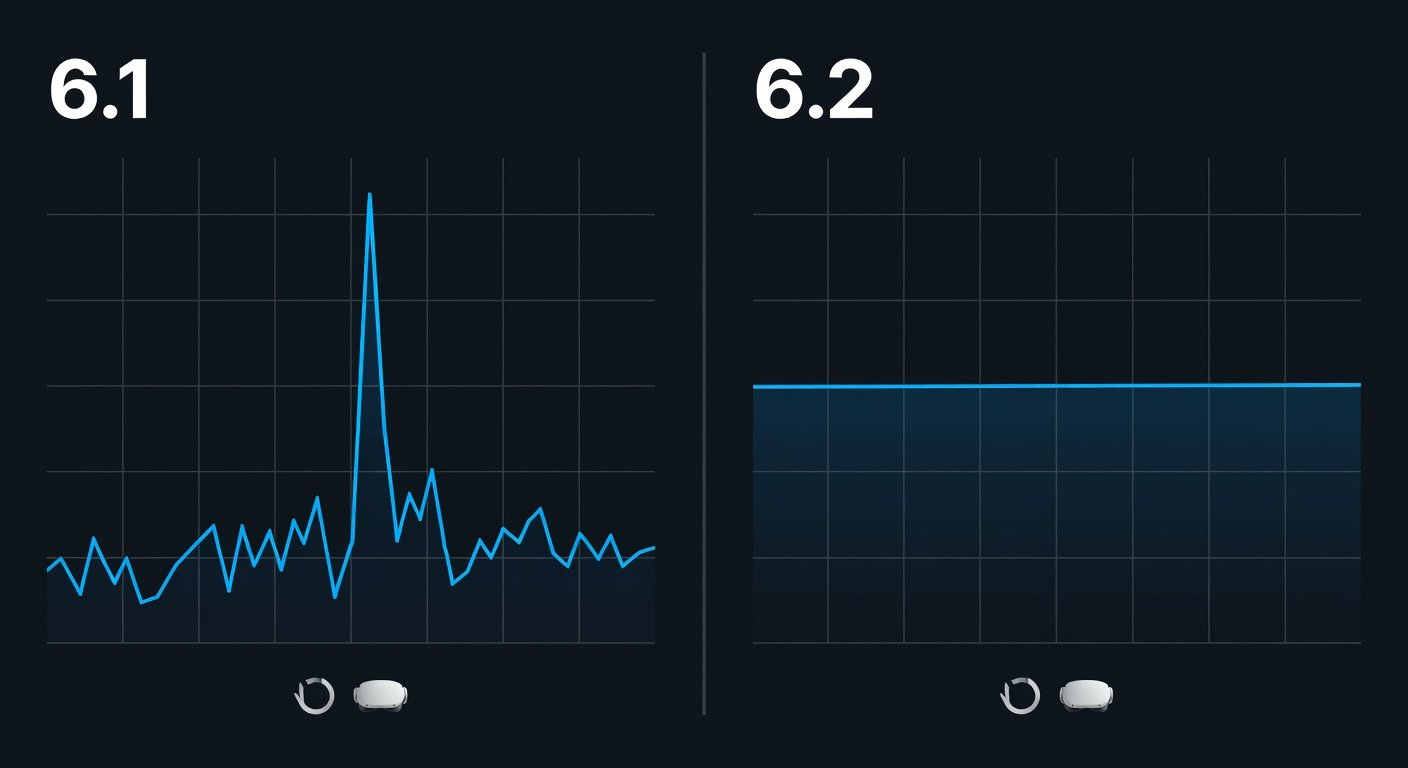
Key takeaways
- If your biggest pain is stalls during async loading, 6000.2 specifically targets main-thread blocking during asynchronous loading (Editor/Player).
- If you ship on Meta Quest + URP with Depth Copy + Uber Post, 6000.2 includes a fix for an up to ~20% performance regression in certain cases (worth A/B testing).
- If you rely on the Job System on Arm devices, 6000.2 fixes a performance regression in JobHandle.Complete() on Arm and includes multiple scalability improvements (less overhead, fewer bad sync points).
- If your scenes have lots of colliders/triggers, 6000.2 fixes OnTriggerStay dispatch regression, improves Physics.TransformSync in deeply nested hierarchies, and fixes IgnoreCollisions() regression at scale.
- If your perf problems “start fine then get worse,” 6000.2 includes several memory regressions/leaks fixes across DX12, shaders (>128 keywords temp leak), 2D Light2D memory regression, and IMGUI inspectors accumulating event handlers.
- If UI/text is part of your stutter story, 6000.2 improves Auto Text Generation (ATG) via multithreading and reduces UI Toolkit GC allocations during TextElement creation plus general layout performance improvements.
- [Build pipelines] If you’re build-limited (especially on shared machines), 6000.1 introduced BEE_BUILD_THREADS to cap build job count so builds don’t consume all CPU. Use it intentionally.
Decision rule: upgrade for a named pain + a measurable baseline; don’t upgrade “for vibes.”
Sections
Player-visible stutter killers: async loading + InstantiateAsync
The most expensive performance bug (business-wise) is the one players feel: hitches during loads, scene transitions, and ‘I tapped and it froze’ moments.
6000.2 includes multiple entries that explicitly target main-thread blocking during asynchronous loading, plus an optimization to InstantiateAsync main-thread times (with an OriginalImmutable flag to reduce times further).
Don’t argue about it. Prove it with two profiler captures on the same benchmark scene (6.1 vs 6.2) and compare spikes and main-thread time during load bursts.
- Asset Pipeline 6000.2.0f1: fixed main thread blocked during asynchronous loading.
- Asset Pipeline 6000.1.4f1 / 6000.2.0f1: fixed main thread potentially being blocked while doing async asset loads.
- Scripting 6000.2.0f1: optimized InstantiateAsync main-thread times; added
OriginalImmutableflag to reduce times further.
If your churn correlates with load hitches, 6.2 is a very real candidate upgrade. Because it targets stalls, not just small throughput gains.
Quest + URP: the changelog line you should not ignore
If you’ve ever had URP settings ‘work fine on PC’ but make Quest feel like it’s dragging through mud... Classic.
Unity 6.2 includes a very specific but high-impact fix: up to ~20% performance regression on Meta Quest in certain Depth Copy + Uber Post cases.
If you use Depth Texture/Depth Copy and heavy post, do an A/B test. Same scene, same content, same device. Measure CPU + GPU frame time; don’t just eyeball FPS.
- URP 6000.2.0f1: fixed up to ~20% performance regression on Meta Quest in certain Depth Copy + Uber Post cases. (UUM-90118)
- SRP Core 6000.2.0f1: Render Graph subpass merging workflow improvements to reduce CPU performance cost.
- SRP Core 6000.2.0f1: optimized Render Graph ExecuteBeginRenderPass() workflow.
- URP 6000.2.0f1: minor CPU optimizations for Bloom.
- URP 6000.2.0f1 / 6000.1.11f1: avoid persistent RenderGraph camera attachment allocations when possible. (UUM-99384)
This is the kind of fix that can turn a borderline VR build into a shippable one; if your project matches the scenario.
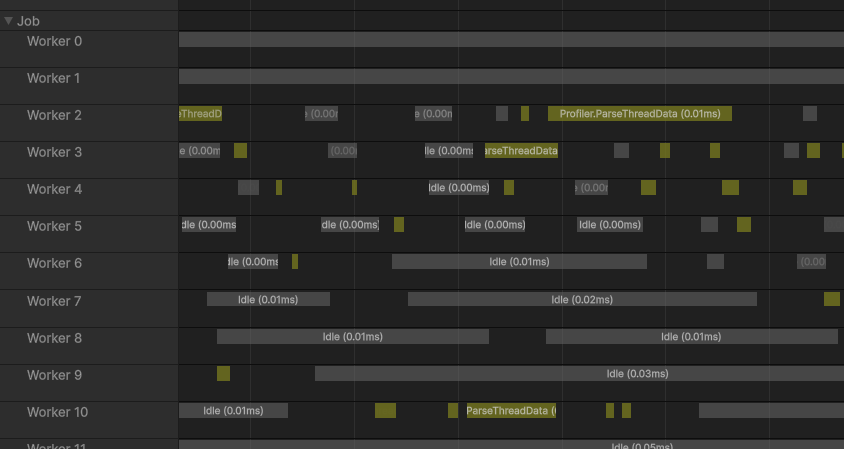
Job System / Kernel: less overhead, fewer bad sync points (especially on Arm)
If you’re Jobifying work but still seeing weird stalls or poor scaling, it’s often not your code. It’s how the scheduler and sync points behave under load.
6000.2’s kernel changes are mostly about avoiding premature synchronization, improving allocator scalability (false sharing fix), reducing Profiler overhead for For Each jobs, and fixing a regression in JobHandle.Complete() on Arm via optimized atomics.
CEO/Producer translation: this is the kind of under-the-hood improvement that reduces ‘random spikes on mid-tier devices’ and lowers the cost of supporting more hardware without rewriting systems.
- Core 6000.2.0f1: Don’t sync job chains early / avoid premature synchronization.
- Kernel 6000.2.0f1: fixed false sharing in job allocator; improved scalability.
- Kernel 6000.2.0f1: fixed performance regression in JobHandle.Complete() on Arm by optimizing atomics.
- Kernel 6000.2.0f1: reduced Profiler overhead when executing For Each jobs.
- Kernel 6000.2.0f1: WorkStealingRange avoids zero-sized batches (better scaling / less wake cost).
- Kernel 6000.2.0f1: removed Transform job “batch kick” to fix a performance regression.
- Kernel 6000.2.5f1: improved performance of job system batch kicks when the batch has only one job.
If Arm devices are your pain tier, the JobHandle.Complete() regression fix alone is a strong ‘upgrade and verify’ candidate.
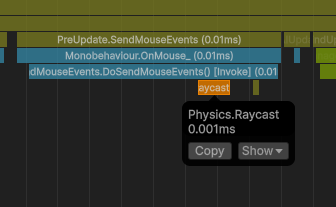
Physics at scale: triggers, IgnoreCollisions(), and nested hierarchies
Physics performance problems are sneaky because they often ‘work fine’ until content scales: more enemies, more hitboxes, more nested rigs, more triggers.
Unity 6.2 calls out multiple physics regressions and fixes, including OnTriggerStay dispatch with large collider counts and IgnoreCollisions() when called in large quantities, plus a TransformSync improvement for deeply nested collider hierarchies (called out as a large reduction vs before).
Build a stress scene that matches your worst-case collider counts and run it on target hardware. Treat physics like a budget, not a prayer.
- Physics 6000.2.0f1: fixed performance regression in OnTriggerStay dispatch (large collider counts).
- Physics 6000.2.0f1: improved Physics.TransformSync performance in deeply nested collider hierarchies (large reduction vs before). (UUM-87199)
- Physics 6000.2.0f1: fixed performance regression on Physics.IgnoreCollisions() when called in large quantities. (UUM-91011)
If your gameplay loops depend on lots of triggers/colliders, 6.2 is a meaningful stability upgrade, not just a micro-optimization.
UI/Text/VFX: reduce GC + move work off the main thread
UI-driven stutter is brutal because players trigger it constantly: menus, upgrades, popups, damage numbers, chat, tooltips. And the Profiler will happily show you GC allocs while your reviews burn.
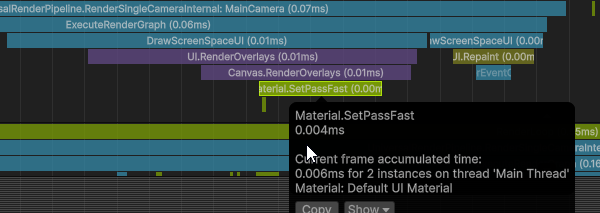
Unity 6.2 improves Auto Text Generation (ATG) via multithreading, reduces UI Toolkit GC allocations during TextElement creation, and includes general UI Toolkit layout performance improvements. On the VFX side, it reduces allocations in VFXBatch.Update and moves some transform work off the main thread in VFX.Update.
Fewer spikes during UI/VFX moments = smoother ‘feel’ = higher conversion at exactly the moments you ask players to click ‘buy’.
- Text 6000.2.0f1: improved Auto Text Generation (ATG) performance via multithreading.
- UI Toolkit 6000.2.0f1: reduced GC allocations during TextElement creation (moved callback registration).
- UI Toolkit (general): improved performance for layout in UI Toolkit (as stated in the log).
- VFX Graph 6000.2.0f1: reduced allocations in VFXBatch.Update.
- VFX Graph 6000.2.0f1: reduced main-thread cost of VFX.Update by moving some transform work to other threads.
If your stutter is UI/VFX-driven, 6.2 offers the right kind of improvements: fewer allocations and less main-thread work.
Memory pressure and leak plugs: DX12, Vulkan, shaders, 2D lights, editor IMGUI
A lot of ‘random spikes’ are just memory pressure in a trench coat. You won’t always see it as a steady slowdown; you’ll see it as spikes, hitches, and sometimes death-by-thermal on mobile/VR.
6.2 includes multiple memory fixes: reduced DX12 memory consumption (less internal buffer allocations) and a DX12 memory leak fix in certain split Graphics Jobs scenarios; reduced Vulkan command buffer memory overhead with graphics jobs; a temp memory leak fix for shaders with >128 keywords; a memory regression fix from Light2D shader; and an editor IMGUI inspector memory leak caused by accumulating event handlers.
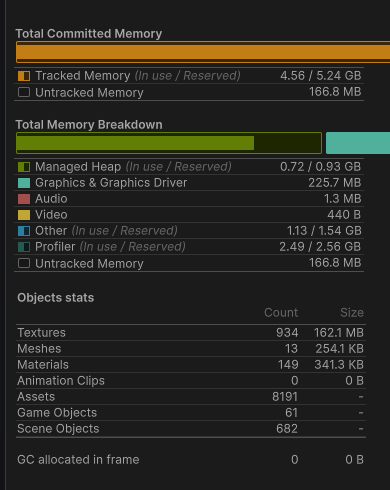
Treat memory like a budget. After upgrading, run a longer play session in your benchmark scene and compare memory behavior with the Memory Profiler (or your existing memory tracking).
- DX12 6000.2.0f1: reduced memory consumption by reducing internal buffer allocations. (UUM-90065)
- DX12 6000.2.11f1: fixed memory leak in certain scenarios when DX12 + Graphics Jobs (split mode). (UUM-120637)
- Android 6000.2.13f1: reduced memory overhead for Vulkan command buffers when using graphics jobs.
- Shaders 6000.2.15f1: fixed a temp memory leak for shaders with >128 keywords. (UUM-120175)
- 2D 6000.2.9f1: fixed memory regression from Light2D shader.
- Animation 6000.2.9f1: fixed memory leak caused by accumulating event handlers in IMGUI inspectors. (UUM-121239)
- Terrain 6000.2.2f1: prevented instanced details being added to detail texture atlas (saves memory).
If your performance degrades during long sessions, memory fixes are often the highest ROI upgrade reason: because they prevent spikes you can’t ‘optimize away’ later.
2D / Tilemap / Sprite: fewer wasted operations and regressions
2D projects can be fast… until Tilemap instantiation, 2D renderer shadow texture weirdness, or batching regressions start stealing time and memory.
6.2 includes: improved performance instantiating GameObjects from Tiles, disabling that instantiation when the Tilemap isn’t on an enabled Grid (explicitly to prevent performance issues), improved performance setting SpriteRenderer.sprite, fixing a performance regression when SRP batcher is disabled, and avoiding unnecessary shadow texture usage for the 2D Renderer.
Smoother 2D performance expands your supported device range (especially mid-tier mobile), which lowers refunds and increases market reach.
- 6000.2.0f1: improved performance of instantiation of GameObjects from Tiles. (UUM-110584)
- 6000.2.0f1: disabled instantiation of GameObjects from Tiles when Tilemap isn’t on an enabled Grid to prevent performance issues. (UUM-110584)
- 6000.2.0f1: improved performance of setting SpriteRenderer.sprite.
- 6000.2.0f1: fixed a performance regression when the SRP batcher is disabled.
- 6000.2.4f1: fixed unnecessary shadow texture usage for 2D Renderer.
- 6000.2.9f1: fixed memory regression from Light2D shader.
If you’re 2D and you’ve had Tilemap or 2D lighting pain, 6.2 has multiple targeted fixes worth validating.
Editor + build pipeline sanity: protect dev velocity
Not all performance wins ship to players. Some ship to your team’s sanity. And that matters because slow iteration quietly kills productivity (and deadlines).
The changelog includes Editor performance improvements like improved startup performance on Windows, better Game View performance in a specific Player Settings scenario, an option to disable “Force GC on Scene Load” (which can improve Editor performance by reducing forced GC/unload), plus build tooling like BEE_BUILD_THREADS to cap build job count so builds don’t consume all CPU.
Faster iteration reduces cycle time per feature and per fix; which is a straight-line improvement to burn rate efficiency.
- Editor 6000.2.0f1: added “Force GC on Scene Load” option; disabling can improve Editor performance (less forced GC/unload).
- Editor 6000.2.0f1: improved Editor startup performance on Windows (and deferred Package Manager setup until licensing is ready).
- Editor 6000.2.11f1: fixed Game View performance drop in Editor Player Settings. (UUM-120344)
- Build System 6000.1.0f1: added BEE_BUILD_THREADS env var to cap build job count (prevents builds from consuming all CPU).
- Editor/Build Pipeline 6000.2.0f1 / 6000.1.10f1: fixed a slight/minor performance regression in the build pipeline.
Even if player FPS is fine, improving build/editor throughput can be the difference between shipping and slipping.
Next steps
If you want the fastest path: run one A/B benchmark capture (6.1 vs 6.2) on your target device, then decide with data.
If that sounds like “cool, but we’re already drowning”: book a Performance Diagnostic and we’ll turn your captures into a short fix/upgrade plan. Stop burning a week and let’s kill it in a day.